1928 — First Solo England to Australia
The flight that made Bert Hinkler a household name across the Empire
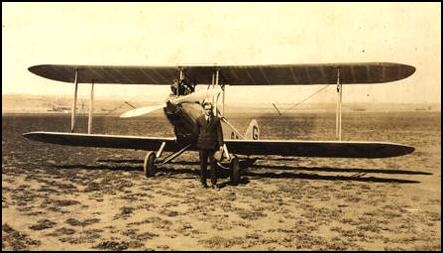
The flight that made Bert Hinkler a household name across the Empire began at Croydon, England, on 7 February 1928 and ended at Darwin on 22 February 1928. In just under fifteen and a half days, Bundaberg-born Herbert John Louis “Bert” Hinkler completed the first solo flight from England to Australia in his light biplane, Avro Avian G-EBOV. The elapsed time cut the previous England–Australia record of twenty-eight days almost in half and proved that a carefully prepared light aeroplane, flown alone, could open the long air corridor between Britain and Australia.
Why the flight mattered
By the late 1920s, the England–Australia route was still a severe test of machines, weather, and navigation. Earlier crossings had been made by crews in heavier aircraft after the First World War. Hinkler’s achievement was different: one pilot, a small Avro Avian, and a schedule measured in days rather than weeks. The flight showed that reliable long-distance air travel between the United Kingdom and Australia was moving from experiment toward practical route-making — and it turned a quiet Queenslander into an international figure overnight once the press caught up with his progress beyond India.
The aircraft — Avro Avian G-EBOV
Hinkler flew Avro Avian G-EBOV, a development of the prototype Avro 581 Avian (construction number often cited as 5116). The aeroplane had been raced and modified in England before the Australia attempt; for the long-distance configuration it is commonly described as modified to Avro 581E standard, with an A.D.C. Aircraft Cirrus inline engine (about eighty horsepower at maximum rating in contemporary descriptions) and provisions for the fuel load needed for long legs. Extra tanks and other long-range changes were part of preparing a light touring biplane for an Empire-scale journey.
Hinkler already knew the type. In 1927 he had used G-EBOV for a notable non-stop flight from England to Riga, Latvia — experience that fed directly into the 1928 attempt. After the Australia flight, the historic Avian was later associated with public display in Queensland; today it is widely reported as held in the Queensland Museum collection at South Bank, Brisbane.
Explore the machine in more depth on the aircraft page.
Preparation and departure
Financing the attempt was not straightforward. The Australian Dictionary of Biography records that Hinkler had difficulty raising funds for the Australia flight and had earlier made an unsuccessful attempt, with R. McIntosh, on a London-to-India air record to help secure money for the longer journey.
On the morning of 7 February 1928 he left Croydon Aerodrome. Contemporary and later accounts emphasise how quiet the send-off was compared with the crowds that would greet him in Australia — often described as limited to close supporters and ground staff rather than a public spectacle.
For navigation on the long route he relied on essentially simple tools: a Times atlas is repeatedly cited in reputable summaries, and the live page correctly notes a compass as part of that practical approach. There was no modern radio airway network of the kind later generations take for granted.
The route — England to Darwin
After a quiet Croydon departure on 7 February 1928, Hinkler flew east in stages through Europe and the Mediterranean, across North Africa and the Middle East, through British India and South-East Asia, then across the Timor Sea to Darwin, arriving 22 February 1928 — the first solo England-to-Australia flight, in just under fifteen and a half days against a prior record of twenty-eight. Fine-grained overnight and desert-stop detail stays provisional until a primary log extract is checked.
Public interest intensified once Hinkler reached British India. Press nicknames such as “Hustling Hinkler” spread as each landing was reported. On 22 February 1928 he landed at Darwin, completing the first solo England-to-Australia flight. Contemporary reporting described strong public emotion at the landing; secondary summaries often cite crowds on the order of ten thousand. Exact crowd counts from period press should be treated as estimates.
Distance figures commonly given for the journey are about 11,000 miles (about 18,000 kilometres). Elapsed time is consistently described as just under fifteen and a half days, against a previous record of twenty-eight days. Flying time is frequently cited as about 128 hours.
Numbers at a glance
- Pilot: Herbert John Louis “Bert” Hinkler
- Aircraft: Avro Avian G-EBOV (long-range / 581E configuration)
- Departure: Croydon, England — 7 February 1928
- Arrival (Australia): Darwin — 22 February 1928
- Homecoming milestone: Bundaberg — 27 February 1928
- Elapsed time: just under 15½ days (previous record: 28 days)
- Character of the flight: first solo England–Australia
- Navigation: Times atlas and compass (as summarised on this site)
Welcome home — Darwin to Bundaberg and beyond
From Darwin, Hinkler continued across Australia toward Queensland. On 27 February 1928 he returned to his hometown of Bundaberg to a tumultuous welcome. The State Library of Queensland has preserved contemporary Brisbane Courier reporting of the crowd’s reaction as the Avian appeared through cloud, Hinkler’s landing, and the surge of people that followed — including an emotional reunion with family at the machine.
In early March 1928, Brisbane celebrated in turn. Period accounts describe a landing associated with Ascot racecourse, large crowds (figures around twelve thousand appear in secondary summaries), a procession including Queen Street, and a civic reception at Brisbane Town Hall. Public-domain and library-held photographs of the Avian and crowds in Queen Street remain among the most recognisable images of the homecoming.
For Bundaberg roots and childhood context, see: https://www.berthinkler.com/early-life
For the wider chronology, see: https://www.berthinkler.com/timeline
Honours and public reaction
Australian papers and Empire coverage turned Hinkler into a celebrity. He was widely nicknamed “Hustling Hinkler,” and popular song titles of the moment included Hustling Hinkler Up in the Sky. Manufacturers and souvenir publishers also leaned into the fame — a reminder that the flight lived in popular culture as well as in aviation record books.
Formal recognition followed quickly:
- A Commonwealth Government prize of £2,000.
- Appointment as an honorary squadron leader in the Royal Australian Air Force (RAAF) Reserve.
- Award of the Air Force Cross (AFC).
- Presentation of a gold cigarette case by Prime Minister Stanley Bruce (widely illustrated in later commemorations).
- An invitation, arranged through Speaker of the House of Representatives Littleton Groom, to be seated on the floor of the House of Representatives in recognition of the achievement — a rare honour.
More on lasting recognition: https://www.berthinkler.com/legacy
What came next
Hinkler returned to England by sea in October 1928 (Australian Dictionary of Biography). He later continued long-distance pioneering, including the first solo flight across the South Atlantic Ocean in 1931. His life ended in January 1933 after a crash in Italy during another long-distance attempt — a loss that shocked the aviation world, but which this page keeps brief so the 1928 story remains the focus.
See other flights: https://www.berthinkler.com/flights
See the full timeline: https://www.berthinkler.com/timeline
Sources and further reading
Draft facts above were cross-checked against reputable public sources including:
- Australian Dictionary of Biography — E. P. Wixted, “Hinkler, Herbert John (Bert) (1892–1933)”
- State Library of Queensland — “Bert Hinkler’s record flight (1928)” and related John Oxley Library image essays
- This Day in Aviation — 22 February 1928 entry (Bryan R. Swopes)
- Secondary aviation summaries (e.g. Vintage Aviation News day-by-day digest; Airways Museum notes on G-EBOV)
Prefer libraries, ADB, museum collection statements, and digitised newspapers (Trove) for final fact-check.